
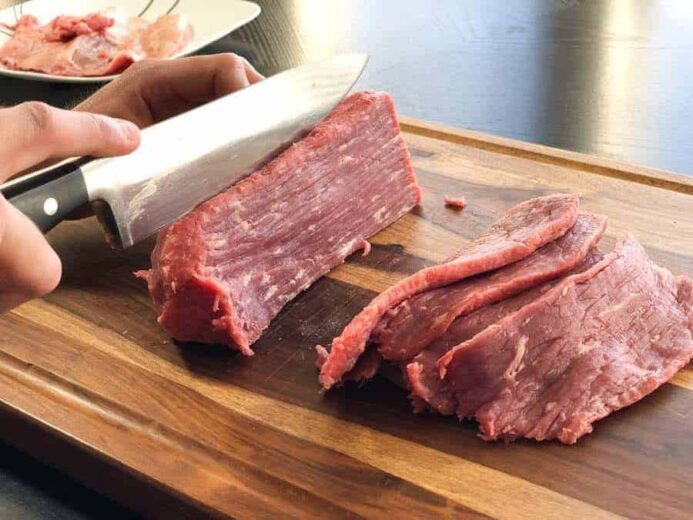
The flavor, texture, and overall cooking experience of beef can all be significantly altered by selecting the appropriate cut. Two cuts that often confuse home cooks are the eye of the round and the inside round. Both come from the beef round, which is a lean and hardworking part of the animal. Because of their similarities, many wonder how to decide which one suits a specific recipe. In many home kitchens, the question of eye of round vs inside round comes down to how each cut responds to different cooking methods and the texture you want in the final dish. Understanding their individual strengths helps you prepare flavorful meals without guesswork.
Understanding The Location And Characteristics
The beef round is located in the hind leg area, known for its lean structure and firm muscle fibers. Since these muscles are used frequently, they tend to produce tougher cuts. The eye of round and the inside round share this lean profile, but they differ in shape, size, and best use.
The eye of the round is a small, cylindrical cut that resembles a tenderloin in shape but not in tenderness. It has very fine grain and minimal marbling, which means it requires slow and moist cooking methods to unlock tenderness. The inside round, sometimes referred to as the top round, is bigger and marginally softer than the eye of round. Its texture is more uniform and it works well for slicing, roasting, and marinating.
Texture And Tenderness Differences
One of the main considerations when choosing between these cuts is tenderness. The eye of round is known for being quite firm, with very little fat to keep it moist during cooking. Without proper technique, it can become dry or overly chewy. This makes it ideal for recipes that allow it to cook slowly at lower temperatures, such as pot roast, slow cooker meals, or braised dishes.
The inside round offers more versatility because it has a slightly softer grain and a broader shape. This cut can handle roasting better than the eye of round, especially when cooked to medium rare and sliced thinly. Its texture responds well to marinades that help tenderize the meat and add flavor. Because of its structure, it is often used for deli-style slices, lean roast beef, and classic family-style roasts.
Flavor Profile And Cooking Methods
Since both cuts have minimal fat, their flavor largely depends on seasoning and cooking method. The eye of round needs extra care to ensure moisture retention. Slow cooking with broth, wine, or aromatics helps add richness to the meat. It also works well when cut into thin medallions and cooked quickly in a pan if tenderized beforehand.
The inside round can take on a wider range of flavors. It roasts beautifully when coated with herbs, spices, or simple salt and pepper. Because it remains tender when sliced thin, it is popular for sandwiches, stir fries, and oven roasts. When marinated, it absorbs flavors quickly due to its lean surface and mild taste.
Best Uses In Everyday Cooking
Choosing between eye of round and inside round becomes easier when you match the cut to the dish you want to prepare.
For slow-cooked meals such as pot roast, beef stew, or braised dishes, the eye of round becomes a strong choice. It may not be naturally tender, but time and moisture help transform it into a soft and flavorful result. It is also suited for dishes where the meat is sliced very thin after cooking, as this helps compensate for its firmness.
The inside round fits well into recipes that require carving or slicing. It shines in oven-roasted preparations, beef sandwiches, salads with thin beef strips, or pan-seared dishes that are cooked to medium doneness. Since it holds its structure well, it is ideal for neatly sliced presentations.
Nutritional Considerations
Both cuts appeal to those who prefer leaner beef options. They contain less fat than many premium cuts, making them suitable for individuals looking to reduce excess fat intake without giving up the satisfaction of a beef-centered meal. The lean nature of these cuts also means they pair well with health focused recipes that emphasize fresh herbs, vegetables, and lighter sauces.
How To Choose The Right Cut?
When deciding which cut to use, consider the cooking method and the final texture you want. Choose the eye of round if your recipe involves slow, moist cooking or if you prefer shredded or thinly sliced beef. Opt for the inside round if you want a roast that slices cleanly or a cut that benefits from quick marinades and versatile preparations.
Conclusion
Both the eye of round and the inside round offer excellent value and flavorful results when cooked correctly. Understanding their differences allows you to confidently choose the right cut for your meal. Whether you prefer slow cooked tenderness or neatly sliced roasts, selecting the right round cut ensures an enjoyable and satisfying dining experience every time.